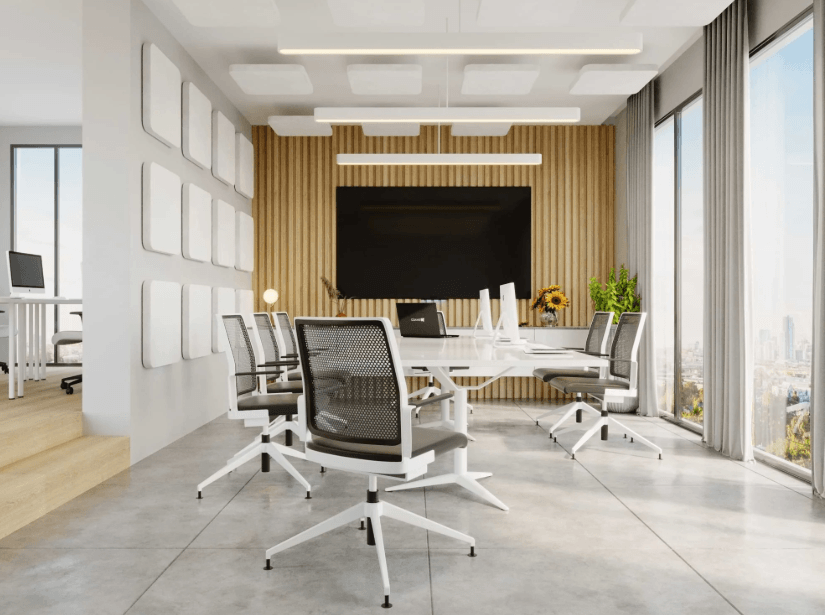
Walls, floors and ceilings are hard surfaces that make sound reflect back and forth in a room. This bouncing produces echo and reverberation to such an extent that speech becomes hard to understand. This guide indicates how these problems can be solved with the help of acoustic panelsand acoustic sound panels and how the elements can enhance the clarity of sound indoors.
The impact of acoustic panels and acoustic sound panels in sound clarity
Sound absorption stops echo at the source
Porous materials in acoustic panels absorb the sound waves rather than reflecting them back in the room. When an acoustic panel receives sound, its energy is transformed to minute quantities of heat in the material. These are how acoustic panels and acoustic sound panels enhance the sound clarity:
- Echo reduction: The acoustic panels assist in absorbing the sound waves as they bounce back and this would lead to the overlapping sound that renders the speech and music sounding muddy or distorted.
- The reverberation control: Less sound reflections off of solid surfaces imply that conversations can be well understood even in big open rooms with acoustic sound panels in place.
- Background noise lowering: Acoustic panels decrease the level of ambient noise and enable those who hear to concentrate on the main sources of sound without any disruption.
- Speech intelligibility boost: Words can be understood more easily as direct speaker sound no longer competes with reflected echoes upon treatment of the room with acoustic sound panels.
Placement matters for maximum effectiveness
The placement of acoustic sound panels is done strategically to address the particular surfaces where sound is most problematic. The initial reflection is on side walls and ceilings and should be given priority when it comes to installing acoustic panels. The following are the rules of placing sounds where they can be heard best:
- First reflection points: Acoustic panels should be installed around those areas where the sound produced by the speakers or voices is first reflected on the walls before it reaches the ears of the listeners.
- Behind speakers or talkers: Acoustic sound panels on the wall placed directly behind the sources of sound prevent echoes which create distortion of the signal.
- Opposite hard surfaces: Acoustic panels placed facing the windows or bare walls prevent the bouncing back and forth of sound elements on parallel walls.
- Ceiling clouds: Sound panels suspended in the air over the seating space reflect sound which would otherwise be reflected by hard ceilings down the room.
- Bass control corners: Room corners are lined with thicker acoustic panels that absorb low-frequency accumulation that creates boomy, unclear sound.
See also: How Custom Sticker Labels Enhance Customer Experience and lead to Repeat Purchases
Different panel types serve different purposes
Acoustic sound panels are available in different thicknesses, densities and material composition to particular sound issues. The lower frequencies are absorbed by thicker acoustic panels whereas the mid and high frequencies are absorbed by thinner ones. The following are types of acoustic panels and acoustic sound panels and their uses:
- Fabric covering fiberglass: These high-density acoustic panels have a large frequency response range, suitable in recording studios and critical listening rooms.
- Polyester or foam panels: These light acoustic sound panels are useful in reducing echo in offices, conference rooms and home theaters.
- Perforated wood panels: The acoustic panels are fashionable as well as sound absorbing which would fit in high-end corporate settings.
- Bass traps: Extra thicker acoustic sound panels that are corner specific absorb low frequency accumulation that is not captured by standard panels.
Conclusion
The use of acoustic panels and acoustic sound panels enhances the clarity of the sound in the interior and this is due to the fact that reflected sound waves that contribute to creating echo and reverberations are absorbed. The acoustic panels are placed strategically on the walls, the ceilings, and corners to work on the particular bounces that cause the voice and music to be inaudible. The outcome is improved listening, concentration and working, entertainment and discussion comfort.