Commercial cleaning is often an underappreciated type of industry until it is performed improperly. Workspace cleanliness has a direct effect on employee health, client perception, and productivity. Unfortunately, for many years, the commercial cleaning industry was not technologically advanced enough to meet the demands of changing businesses.
For the past ten years, the commercial cleaning industry has seen major advances in cleaning technology, allowing many of the companies and cleaning contractors that adopt these new methods to achieve greater results and cost savings than were available with past methods.
The Shift Away from Corded Equipment
In a commercial environment, cords cause an excessive amount of manual labour as there is a significant amount of time used finding an available power source, moving a power cord, and making sure that the power cord is not creating a tripping hazard. Additionally, the use of cords restricts the areas that can be cleaned because cleaning staff cannot disrupt the work area cleaning (by moving them to a different location). The use of battery-powered equipment for cleaning has resolved most of these issues related to the use of electrical power cords.
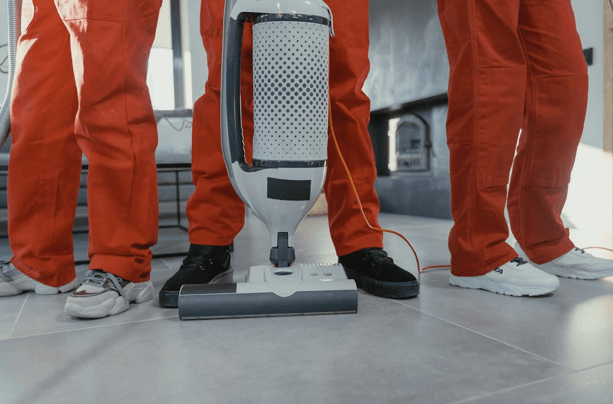
A quality commercial battery vacuum will provide uninterrupted airflow for multiple cleaning cycles without any interruption from an electrical cord. As a result, operators will be able to travel continuously around a large area cleaning without having to stop to move to the nearest power source.
Additionally, the lithium-ion battery technology in commercial battery-operated vacuum cleaning equipment has eliminated the previous problems associated with battery run time; this means that most professional battery-powered vapour vacuum cleaners can now be used continuously for many hours at a time without having to recharge their batteries.
What to Look for in Commercial Equipment
While many cordless vacuums are made for commercial purposes, there are some key factors that set them apart from consumer models. These include: the amount of power of the motor; the ability to sustain that power over an extended period of time; filtration (increasingly HEPA filtration for air quality); capacity for the battery; ability to use hot-swappable batteries; and ability to withstand heavy daily use.
A commercial battery-powered vacuum designed specifically for professional use will out-perform those designed for consumer use in all areas. The reason that consumer vacuums cannot withstand continuous, long periods of operation is because they were not designed to be used for the type of volume of daily work required by commercial cleaning companies.
See also: How Ai-Powered Intelligent Search Enhances Business Efficiency?
Automation and Robotic Cleaning
Commercial robotic carpet cleaning machines are no longer a novelty but are now widely accepted and being used for practical applications. Autonomous vacuum cleaners and scrubbers are appearing in retail stores, airports, and large office buildings. They can run overnight or during other periods when they are not likely to be interfered with by people.
These types of machines do not replace human cleaners; rather, they complement them by performing high-frequency, repetitive cleaning tasks on floors. In addition, the data produced from these machines provides helpful information to cleaning managers who can use this data to improve their scheduling and staffing systems.
Cleaner Spaces, Healthier Workplaces
The link between the quality of cleaning and employee wellness is widely accepted. Clean workplaces promote comfort through improved air quality based on better air filtration and elimination of allergens, as well as the visible cleanliness of the workplace. Technology has a significant impact on commercial cleaning services by not only improving the efficiency of commercial cleaning companies (through faster and more effective cleaning), but also having a profound impact on the lives of employees.