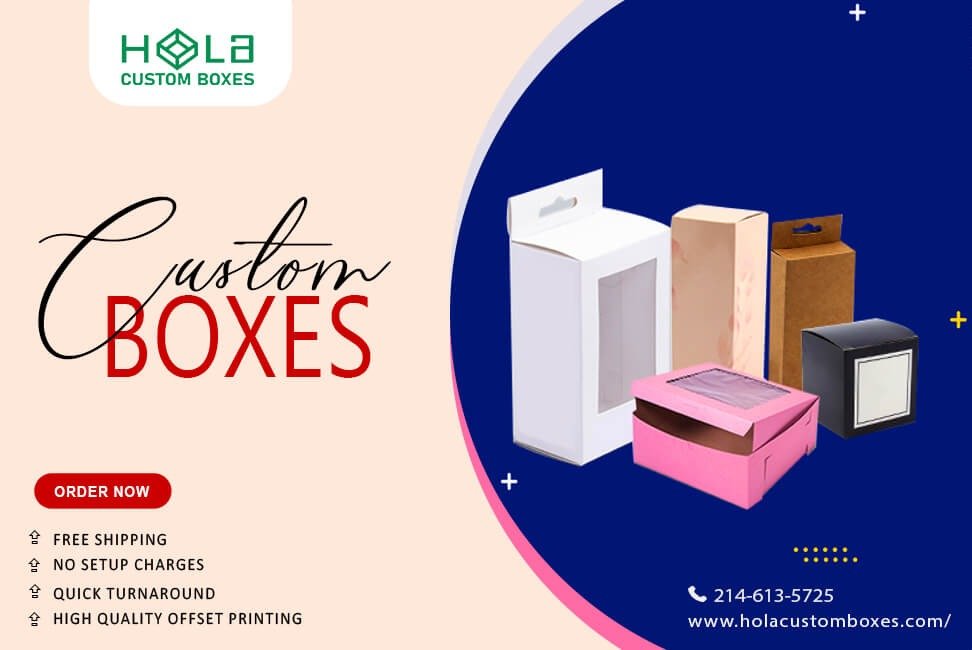
You’ll spec frozen mushroom packaging boxes to survive -18°C to -25°C without board embrittlement, adhesive delamination, or crease fracture. With Hola Custom Boxes, you can choose SBS or C1S/C2S for retail graphics, or E/F-flute microcorrugate for heavier loads, then add moisture-barrier coatings to control MVTR and edge-wicking. Validate ECT/BCT for your pallet stack and run cold-humid conditioning, compression, vibration, wet-rub, and blocking tests. Use food-contact compliant inks, add lot codes and storage text, and keep going for style, sizing, and finish guidance on frozen mushroom packaging boxes.
Main Points
Custom frozen mushroom boxes are built to withstand -18°C to -25°C without cracking, delamination, or adhesive failure.
Moisture-resistant board and barrier coatings reduce edge-wicking and protect graphics during freezer dwell and condensation cycles.
Structural options include tuck-end cartons, sleeves over trays, or microcorrugate formats matched to load, automation speed, and product style.
Verified ECT/BCT crush strength plus cold-humid conditioning, compression, and vibration testing help ensure safe stacking and shipping performance.
Food-safe, low-migration materials with compliant labeling, lot coding, barcodes, and storage instructions support both retail presentation and regulatory needs.
Frozen Mushroom Box Requirements (Cold, Moisture, Crush)
Because frozen mushrooms move through subzero storage, wet environments, and high stacking loads, your box has to meet three non-negotiable requirements: cold tolerance, moisture resistance, and crush strength.
For cold tolerance, you’ll spec board and adhesives that stay stable at -18°C to -25°C without becoming brittle, delaminating, or losing score-fold integrity.
For moisture resistance, you’ll choose a moisture-barrier treatment and maintain tight caliper control to reduce edge-wicking, then design closures that help limit meltwater ingress during handling.
For crush strength, you’ll target verified ECT and BCT values based on pallet pattern, stack height, and dwell time, and you’ll add corner support or double-wall construction where needed.
These performance targets should then be validated through conditioning, compression, and vibration testing under cold and humid profiles. With Hola Custom Boxes, these specs can be built into the packaging standard before production starts.
Food-Safe Packaging Rules and Labeling Basics
Compliance acts as the gatekeeper for frozen mushroom packaging, so the substrate, inks, coatings, and adhesives all need to be selected with food-contact requirements in mind.
You should request supplier documentation showing that the materials are suitable for food-contact applications and that inks and coatings are low-migration and odor-neutral. Freezer-stable adhesives are also important so the pack does not taint the product or fail structurally during cold storage.
If packing takes place near other ingredients, allergen cross-contact controls should also be considered as part of sanitary handling under GMP or HACCP-style systems.
For labeling, the carton should clearly display product identity, net weight, lot or batch code, and a visible “Keep Frozen” storage instruction. Packed-on or best-by dating should be included where required, along with country of origin when applicable.
If the packaging carries claims such as “organic” or “no preservatives,” the appropriate certifier or supporting substantiation should also be in place. Barcode or GTIN zones and recycling marks should be printed accurately and remain legible after freezer handling.
Choose Frozen Mushroom Box Styles (Tuck, Sleeve, Tray)
Once food-contact materials and required label content are locked in, the next step is choosing a structure that protects frozen mushrooms through moisture cycling, compression in master cases, and high-speed packing.
| Style | Spec-driven use case |
| Tuck-end carton | Best for retail units needing dust flaps, positive closure, and stack integrity; should use a locking design that stays reliable in cold conditions. |
| Sleeve over tray | Best for high-speed sleeving, tamper-evident presentation, and clean panel graphics; sleeve-to-tray clearance should be controlled to avoid scuffing. |
| Tray with lidding film or overwrap | Best for IQF portions needing rigid support and fast top-seal performance; flange width and corner radii should be defined for seal continuity. |
The right style depends on the product format, closure speed, stacking requirement, and how much headspace can be tolerated without encouraging ice-crystal abrasion or product movement.
Pick Materials for Freezer-Ready Mushroom Boxes
Three material characteristics largely determine whether frozen mushroom packaging performs well in the freezer: moisture barrier, low-temperature toughness, and print or converting compatibility under condensation.
SBS or C1S/C2S paperboard in the 18–24 pt range is commonly chosen where stronger retail graphics are important. Kraft-backed board may be more suitable where extra tear resistance is needed.
For heavier loads, E- or F-flute microcorrugate in the 32–44 ECT range can provide stronger support, especially when a smooth litho-lam face is needed to maintain panel flatness at freezer temperatures.
Low-temperature crease retention should be specified as well. Score depth should match caliper, and grain direction should align with the primary fold to reduce fracture risk.
Dimensional stability improves when caliper tolerance remains tight and the stock is properly moisture-equilibrated. If the packaging will run on automated cartoning equipment, stiffness targets such as Taber values should also be specified to preserve erecting and tuck performance.
With Hola Custom Boxes, these material decisions can be matched to both retail presentation and cold-chain durability.
See also: Elevate Your Brand with Custom Uniforms: The Ultimate Guide to Professional Workwear
Add Moisture Barriers and Anti-Scuff Coatings
Two upgrades make frozen mushroom cartons hold up better under condensation and ice exposure: a moisture barrier tuned to the sealing method and an anti-scuff surface treatment that protects graphics through case packing and freezer abrasion.
Barrier options may include PE extrusion, aqueous dispersion systems, or wax-free grease-resistant coatings depending on the target MVTR and freezer dwell conditions. Barrier placement should be planned carefully around score lines and glue flaps so fold memory and bond strength are not compromised.
If the structure includes heat-sealed lidding, the seal area should remain uncoated or use a sealable PE layer with verified hot-tack performance.
For print durability, a water-based or UV anti-scuff varnish can be added, with rub resistance and coefficient-of-friction performance validated at freezer temperatures. Soak, freeze-thaw, and wet-rub testing should all be completed before the spec is approved for production.
Build Frozen Mushroom Boxes for Safe Stacking
Even though frozen mushrooms are relatively light per retail unit, the cartons still need enough compressive strength and surface stability to prevent pallet movement, stack failure, and top-load collapse.
ECT-rated corrugate should be selected according to expected stack height and dwell time, with flute direction aligned vertically on sidewalls to maximize column strength. Where higher protection is needed, full-overlap or reinforced RSC-style designs with doubled end panels can help prevent corner crush.
Match ECT to stack height and dwell time, keep flute direction vertical, and reinforce corners with full-overlap or doubled-end constructions where needed.
Die-cut interlocks or anti-skid varnish zones can improve pallet stability by helping cases key together without excessive shear. Score depth and caliper should also be controlled carefully so panels do not buckle at freezer temperatures.
Compression performance should be qualified through ASTM-style compression testing, while vibration and impact screening can confirm that the stacked load stays stable through transit.
Size Boxes for Portions, Blends, and Bulk Packs
Once stack strength and pallet stability are set, the carton should be sized around the actual pack format so cube is not wasted and frozen product is not damaged in the process.
For portion packs, the internal footprint should hold the pouch flat without curl, allowing only enough extra space for frost growth and film seams. Inside height should match the frozen product block closely to prevent panel bulge.
For mushroom blends, the geometry may need a little extra headspace and added corner-crush allowance because caps and stems create a more varied internal profile.
For bulk packs, sizing should focus on cube efficiency. Case count per layer should be set first, then length and width can be back-calculated to maximize pallet utilization while staying within handhold and lift limits.
Board caliper and score depth should remain compatible with the tighter radii that often come with compact freezer packaging formats.
Print Mushroom Boxes to Win the Freezer Aisle
Frozen mushroom packaging has to communicate quickly in a difficult retail environment, so the print system should be chosen for contrast, legibility, and cold-chain durability rather than appearance alone.
CMYK builds with strong contrast, rich blacks, and minimum type sizes in the 7–9 pt range help keep copy readable even after frost, glare, and abrasion. Fine strokes should remain thick enough to avoid fill-in during printing and handling.
Critical claims should stay on the principal display panel and within safe zones that avoid tucks, seams, and creases. Images should be high enough resolution to stay clean on coated SBS or freezer-grade kraft, while fine gradients should be used carefully to reduce visible banding.
The hierarchy should remain clear: species, cut style, net weight, and “Keep Frozen” messaging should all appear in consistent positions. Barcodes should include GS1-compliant quiet zones, and lot or date fields should be sized for thermal-transfer overprint where needed.
Testing under cold and humid conditions helps ensure the finished design stays functional in the freezer aisle.
Choose Cold-Safe Finishes (Matte, Gloss, Foil, UV)
Finish selection should work as part of the cold-chain performance spec, not just as a visual enhancement. Matte, gloss, foil, and UV effects all need to be reviewed against freezer storage, condensation cycling, and scuff exposure.
Matte lamination can reduce glare and improve rub resistance, but it should be specified with anti-scuff and cold-crack performance so hazing does not develop under moisture exposure.
Matte lamination reduces glare and improves rub resistance, but it should be chosen only when anti-scuff and cold-crack performance are confirmed.
Gloss lamination can improve wipeability and barrier performance, though adhesive behavior at freezer temperatures and seal-edge integrity should be checked so the finish does not lift.
Foil should only be used where creasing can be controlled. Cold-flexible foil, strong bond performance, and tight registration tolerances are all important. Spot UV can also help protect logos and add emphasis, but it should be limited so brittleness and cracking do not become issues.
Wet-rub, blocking, and delamination testing should always be part of finish approval.
Order Custom Frozen Mushroom Boxes From Hola (MOQ, Dielines, Lead Time)
After cold-safe barriers and finishes are selected, the project needs a supplier workflow that can turn those specs into a repeatable packaging run.
With Hola Custom Boxes, the process typically starts by confirming the box style, board grade, and actual freezer conditions such as condensation level, storage temperature, and cold-chain transit profile. Low MOQs may be available for test runs before scaling into larger production volumes.
Dielines can then be prepared in AI or PDF format, showing bleed, glue flaps, score rules, and barcode-safe zones so artwork remains inside fold tolerances and does not crack at the creases.
Lead time generally includes proof approval, printing, die-cutting, folding, gluing, quality control, and final shipment. Brands can choose standard or expedited timing depending on launch needs. Requesting samples first is often the best way to confirm fit, frost resistance, and print durability before committing to full production.
Frequently Asked Questions
Can Frozen Mushroom Boxes Be Microwaved or Oven-Heated Directly?
Frozen mushroom boxes should not be microwaved or oven-heated unless the packaging is specifically rated and labeled for that use.
Substrate, coatings, inks, and adhesives all need to be validated for heat resistance and food-contact suitability under heating conditions. Foil or metallic inks should also be avoided in microwave use unless the pack is explicitly designed for it.
Do You Offer Compostable or Recyclable Options for Freezer Mushroom Packaging?
Yes, recyclable and compostable options can be explored depending on barrier needs and freezer requirements.
Paperboard cartons with aqueous or dispersion barriers may help preserve recyclability, while certain compostable film systems may be used where industrial compostability is the goal. Any such option should still be checked against temperature range, barrier performance, and disposal claims before approval.
Can You Add QR Codes for Recipes, Traceability, or Farm Information?
Yes, QR codes can be added for recipes, lot-level traceability, farm information, or certification support.
Placement, size, and error-correction level should be selected carefully so scanning remains reliable after printing. Variable QR codes may also be used when batch-level tracking or audit support is required.
Are Child-Resistant or Tamper-Evident Features Available for Frozen Mushroom Boxes?
Yes, tamper-evident features can be added depending on the pack format, and child-resistant features may be used where the broader pack system requires them.
Examples include tear strips, tamper labels, glued end-locks, or shrink-based outer security. Any added features should still be validated for freezer-safe performance and adhesive reliability.
Do You Provide Inserts or Dividers to Separate Mixed Mushroom Varieties?
Yes, inserts and dividers can be used to separate mixed mushroom varieties.
Corrugated partitions, SBS dividers, or thermoformed tray inserts may be sized to the required cavity layout, with venting and food-contact needs considered as part of the design. These inserts can also be combined with other structural or tamper-evident features if needed.
Final Thoughts
When specifying frozen mushroom packaging, the priority is to balance freeze stability, moisture resistance, and crush protection so the carton stays functional from production through frozen retail display. The chosen substrate should resist cracking, delamination, and score failure, while barrier systems and anti-scuff finishes help protect both graphics and structure.
With Hola Custom Boxes, brands can choose tuck-end, sleeve, tray, or microcorrugate formats and then match those styles to the right board grade, barrier layer, closure system, and cold-safe finish. Pack sizing can be tuned for portions, blends, or bulk formats, and print zones can be engineered for barcodes, lot codes, and freezer-legible claims.
By locking in materials, structure, moisture protection, and testing standards early, Hola Custom Boxes helps create frozen mushroom packaging boxes that protect product quality, support retail compliance, and maintain consistent brand presentation through the full cold chain.