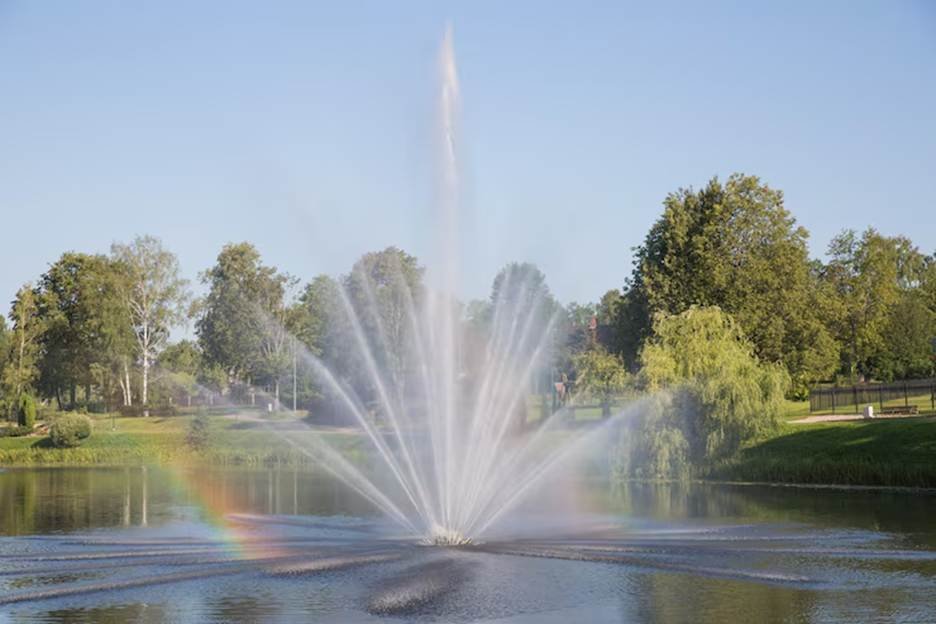
Adding a fountain to your pond changes everything. The water moves, the sound fills the space, and the whole feature comes alive. But before you start shopping or drilling holes, there are some real questions you need to answer. Getting this wrong means wasted money, a fountain that doesn’t work right, or worse, damage to your pond ecosystem.
Most people think bigger ponds just need bigger fountains. That’s part of it, but not the whole story. Large pond fountains need careful planning because the stakes are higher. You’re dealing with more power, deeper water, and equipment that costs more to fix if something goes wrong. The good news is that thinking through these five things now saves you headaches later.
1. Pond Size and Depth Matter More Than You Think
Your pond’s dimensions control what fountain will actually work. A shallow pond can’t support certain fountain styles, no matter how much you want them. Deep ponds need pumps with enough strength to push water all the way up from the bottom.
Start by measuring your pond. Get the length, width, and depth at the deepest point. Most floating fountains need at least three to four feet of depth to work properly. Shallower than that, and you risk the pump pulling in sediment or running into the bottom during low water periods.
The surface area matters too. A fountain that’s too small for a large pond looks lost and doesn’t circulate water effectively. Too large and it creates excessive spray that lands outside the pond, wasting water. You want coverage that reaches most of the surface without overdoing it.
2. Power Requirements Can Get Complicated
Electricity and water don’t mix well, so this part needs attention. Large fountains pull serious power. You need a dedicated circuit with proper voltage and amperage. Running an extension cord from your house is not the answer here.
Check what power source you have near the pond. If there’s nothing close, you’ll need an electrician to install a GFCI outlet rated for outdoor use. This protects against shocks and electrical faults. The distance from the power to the pond affects which fountain models you can use. Longer cable runs mean voltage drop, which can hurt pump performance.
Some people consider solar fountains for large ponds. They work in the right conditions but have limits. Cloudy days mean less power. You need to be realistic about whether solar can deliver enough energy for the fountain size you want.
See also: Tempo Traveller on Rent in Pune: Your Best Bet for Stress-Free Group Getaways
3. Water Quality and Filtration Needs
Fountains don’t just look nice. They move water and add oxygen, which helps with water quality. But they also kick up debris and put stress on the pump if your water is dirty. Ponds with lots of algae, leaves, or sediment clog fountain nozzles fast.
Think about what’s in your pond right now. Do you have fish? Plants? Is there a lot of organic material settling on the bottom? A fountain pulls water through its pump constantly. If that water is full of particles, the pump works harder and wears out faster.
Pre-filtering helps. Some fountain systems come with intake screens. Others need separate filtration. Either way, cleaner water means longer equipment life. You might need to clean your pond before installation or set up a regular maintenance routine after.
4. Spray Patterns and Wind Exposure
This one surprises people. You pick a fountain with a beautiful spray pattern, install it, and then the wind turns it into a mess. Water blows everywhere except where you want it. You lose gallons every day to evaporation and overspray.
Large ponds are often in open areas. That means wind. If your pond sits in a spot that catches strong breezes, you need a fountain design that handles it. Shorter, wider spray patterns do better in wind than tall, narrow ones. Some fountains let you adjust the nozzle to change the pattern.
Pay attention to what’s around the pond, too. Spray hitting decks, patios, or buildings causes water damage over time. Plants nearby get soaked constantly, which some species don’t like. Position matters as much as the fountain itself.
5. Seasonal Use and Winterisation Plans
Do you want the fountain running year-round? Most people don’t think about winter until it arrives. Freezing temperatures damage pumps and pipes. Ice can crack the fountain housings. Even in mild climates, seasonal changes affect how fountains operate.
Plan for this from the start. Will you pull the fountain out each fall? Do you have storage space? Some systems are easier to winterise than others. Submersible pumps might stay in the pond if it doesn’t freeze solid, but you still need to disconnect them and protect electrical components.
Spring startup takes work, too. You’ll clean the pump, check for damage, and test everything before turning it back on. If that sounds like too much hassle, look for fountains designed for easy seasonal maintenance. The right choice depends on your climate and how much effort you want to put in each year.
Making the Right Choice
Installing a large pond fountain isn’t something you rush. Each pond has different needs. Yours might be deep but narrow, or wide but shallow. Maybe you have perfect power access, or maybe you’re starting from scratch. Wind might be a problem, or your area might be sheltered.
Take time to evaluate these five areas. Measure everything twice. Talk to people who’ve installed similar fountains. Check reviews on different pump models. The more you know before buying, the better your results.
A fountain that matches your pond transforms it. The water moves, fish stay healthier, and the whole space feels different. But only if you get the fundamentals right first.